 Winter Tires Canada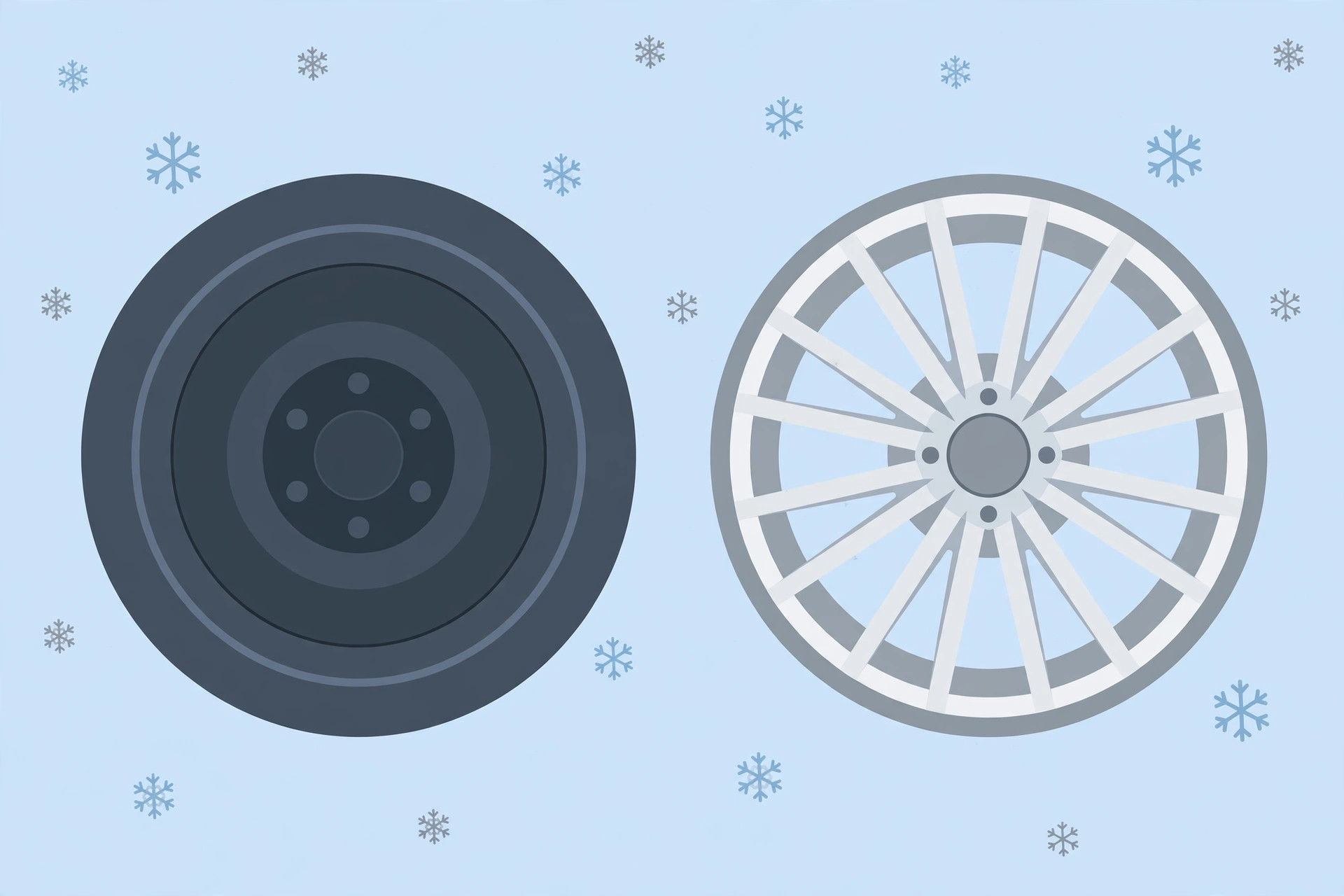
Ask five tire shops about winter rims and you'll get confident, contradictory answers — including from the same website. This guide sorts the contradictions, then covers the two decisions nobody mentions until you're already at the counter: TPMS sensors and downsizing.
The contradictions, resolved up front
Search results genuinely disagree on corrosion. One shop claims steel is "more resistant to corrosion"; another documents steel's rust risk in detail. Both are half-right, so here's the straight version:
- Steel rusts; alloys oxidize. Paint chips on steel expose raw metal, and road salt produces visible rust quickly. Persistent rust on the bead can cause slow air leaks — the kind that light up your TPMS warning at 6 a.m.
- But steel's corrosion is cosmetic and manageable, while alloy corrosion attacks the wheel's protective coatings and the repeated freeze-thaw thermal stress of winter can accelerate cracking in alloys. That's why winter-specific alloys exist with extra anti-corrosion coatings.
- The real winter failure mode is impact, not corrosion. Steel bends; alloy cracks. A bent steel wheel can often be straightened — a dented flange can be cold-pressed by a shop for under $50. A cracked alloy is finished.
Steel vs. alloy: the real comparison
| Factor | Steel rims | Alloy rims |
|---|---|---|
| Impact damage | Bends — often repairable | Cracks — usually a write-off |
| Weight | Heavier: roughly 1–3 kg more per corner; dulls steering feel slightly, can stretch braking distances on ice | Lighter: roughly 2–4 kg less per corner; suspension reacts faster, marginal fuel-economy benefit |
| Cost (set of 4, new) | ~$250–$500 USD range per one source's stated pricing; often about half the price of comparable alloys | ~$800–$2,000+ USD range; winter-specific coated alloys cost more |
| Corrosion | Rusts visibly if chipped; manageable, mostly cosmetic | Coatings degrade under salt and freeze-thaw; winter alloys add protection |
| Snow packing | Flatter faces with fewer spokes — less snow pushes through | Open spoke designs pack with snow; needs periodic clearing |
| Looks | Plain black; hubcaps help slightly | Wide range of designs and finishes |
| Heat | Retains heat longer around brakes | Sheds brake heat faster |
Why winter packages almost always ship on steel
Two reasons, in order. First, economics: a dedicated winter set means buying a second set of wheels, and steel at roughly half the price of alloys keeps the package affordable. Second, toughness: steel handles the freeze-thaw cycle, salt, and hidden potholes better. In snowy regions, keeping a second set of steel wheels for winter is standard practice — chosen for durability, not just price.
TPMS: the hidden cost of a second set
Modern cars monitor tire pressure with sensors inside each wheel. A second set of wheels needs a second set of sensors — or that warning light stays on all winter. The numbers:
- $30–$80 per sensor for the part; $75–$150 per sensor all-in at an independent or tire shop including programming. A full set of four typically lands between $250 and $500; dealerships run higher ($150–$250 per sensor).
- New sensors must be programmed or "relearned" so the car recognizes them. Some vehicles allow a simple ignition-cycle procedure; others need a TPMS tool or scan tool. Your owner's manual or the shop will know which.
- The best time to fit sensors is when buying the tires — the tires come off the wheels anyway, so there's no extra dismounting labor.
Budget the sensors into the package price from the start — a "$600 winter package" that needs $300 in sensors is a $900 package. And don't plan to just ignore the warning light: a constantly-lit TPMS light means you'll never notice a genuine pressure loss, which is exactly what the system is for.
Downsizing for winter: smaller wheels, cheaper tires
Downsizing means fitting a smaller-diameter wheel than stock for winter — say 16-inch instead of 17-inch. It's standard practice for three reasons: smaller winter tires are usually cheaper, narrower tires cut through snow more effectively instead of floating on slush, and the taller sidewall that comes with the smaller wheel adds pothole protection. A size change like 235/55R18 down to 225/60R18 is considered normal for a winter setup. The rules: keep the overall tire diameter close to stock so your speedometer, gearing, and clearance stay correct, and confirm the smaller wheel still clears your brake calipers — a tire shop can verify this before anything is ordered.
Which rim for your situation
- Default answer: steel. Cheapest, toughest, and the standard for dedicated winter sets. The looks don't matter for four months.
- Choose winter-specific alloys if you care about appearance year-round, drive a vehicle where unsprung weight noticeably affects handling, or your summers already run alloys you want to protect from salt.
- Either way, budget TPMS sensors and decide on downsizing before getting quotes — both change the package price significantly.
Fitment checklist: get these right
- Bolt pattern must match your hub exactly — no exceptions.
- Center bore must suit the hub; hub-centric rings can take up the gap on a larger bore, but exact-fit is better.
- Offset must keep the wheel clear of the suspension and brakes.
- Brake clearance — verify the wheel clears your calipers, especially when downsizing.
Getting any of these wrong can cause vibration or rubbing — or a wheel that doesn't seat properly. When in doubt, buy from a seller that matches all of them to your exact year, make, and model.
The bottom line
Steel for toughness and value, alloys for looks and weight — and whatever you choose, price the TPMS sensors and confirm fitment before you commit. The rim decision is a packaging decision; the tire decision is the safety decision.